Wooden Toys vs Plastic Toys: Which Is Better for Your Child?
Oct 28, 2026 . Shahriar Obayed
Choosing the right toys for your child involves more than picking something colourful or entertaining. Parents in Bangladesh are increasingly looking for toys that encourage learning, support healthy development, last longer, and offer good value for money.
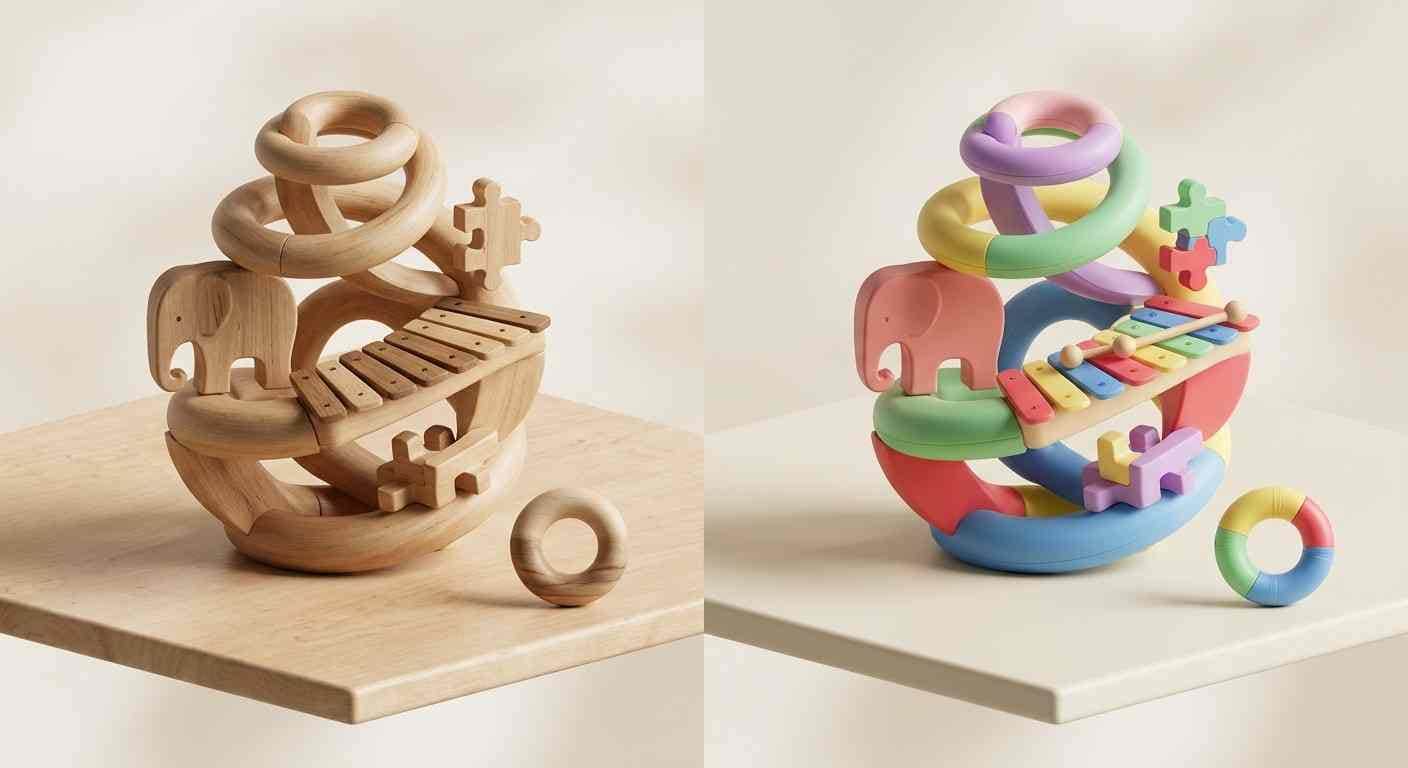
The wooden toys vs plastic toys debate is an important part of that decision. Wooden toys are often appreciated for their natural appearance, durability, and open-ended play opportunities. Plastic toys, on the other hand, offer versatility, lightweight designs, and practical options for activities such as teething and bath time.
But which type is actually better for your child?
The answer depends on the toy's quality, safety, design, and intended purpose. In this guide, we'll compare wooden toys vs plastic toys across six essential factors: safety, durability, developmental benefits, sensory experiences, environmental impact, and price. By the end, you'll have a clearer idea of what to look for when choosing toys for your little one.
1. Wooden Toys vs Plastic Toys: Which Is Safer?
Safety should always be a parent's first consideration when purchasing toys. Babies and toddlers explore objects by touching, squeezing, and sometimes putting them in their mouths. That makes material quality, construction, and age suitability especially important.
Are Wooden Toys Safer for Children?
Wooden toys are popular because of their natural appearance and simple designs. High-quality wooden toys can provide an enjoyable play experience when they are manufactured with smooth surfaces, secure components, and suitable finishes.
Before buying a wooden toy, check for:
Smooth surfaces without splinters or sharp edges.
Securely attached parts that cannot easily come loose.
Paints and finishes suitable for children's toys.
Clear age recommendations and safety information.
A design that does not present a choking hazard.
For example, the BrainyBox Wooden Xylophone introduces children to sounds and rhythm through hands-on musical play.
However, natural wood does not automatically mean a toy is chemical-free or completely safe. The paint, varnish, adhesives, and manufacturing process also matter.
Are Plastic Toys Safe for Babies and Toddlers?
Plastic toys can be appropriate for children when they are well-made, designed for the intended age group, and compliant with relevant safety requirements.
When choosing plastic toys, avoid products with sharp moulding edges, cracked surfaces, loose components, or strong, unusual chemical smells. Check the manufacturer's material information and inspect toys regularly for damage.
Parents should also avoid assuming that a toy is safe simply because its packaging describes it as non-toxic or BPA-free. These claims do not necessarily address every possible safety concern.
Our verdict: Neither wood nor plastic is automatically safer. Prioritise product quality, age suitability, reliable safety information, and proper maintenance.
2. Durability: Which Toys Last Longer?
A toy's lifespan affects how much value it provides. Some toys remain interesting for years, while others quickly become damaged or lose their appeal.
Why Wooden Toys Can Be a Long-Term Investment
Well-made wooden toys can withstand regular play and may be passed from one child to another.
Their simple construction often makes them suitable for repeated activities. Children can use blocks to build towers, create pretend environments, and experiment with different shapes as their abilities develop.
The BrainyBox Tower Puzzle is an example of a stacking toy that encourages children to explore balance, coordination, and problem-solving.
Wooden toys still require care. Excessive moisture, rough handling, damaged finishes, and exposed splinters can affect their condition.
How Durable Are Plastic Toys?
Plastic toys vary considerably in quality. Some inexpensive products may crack or break after repeated use, while well-manufactured plastic toys can remain functional for years.
Electronic toys may also develop battery or mechanical problems over time. If a plastic toy cracks or develops sharp edges, it should be removed from use.
Our verdict: Quality wooden toys can offer excellent longevity, but durable plastic toys can also provide long-term value. Consider construction quality rather than material alone.
3. Developmental Benefits: Which Toys Help Children Learn?
One of the biggest factors to consider when choosing toys is the type of play they encourage.
Children learn through exploration, repetition, imagination, movement, and interaction with their environment. A toy does not need flashing lights or electronic sounds to provide an engaging learning experience.
How Wooden Toys Encourage Learning
Many traditional wooden toys are designed for hands-on, open-ended play.
For example:
Wooden blocks encourage creativity, building, and spatial awareness.
Stacking toys introduce size, balance, and sequencing.
Wooden puzzles encourage observation and problem-solving.
Musical toys help children explore rhythm, sound, and coordination.
A wooden musical toy such as the BrainyBox Wooden Xylophone lets children create sounds through their own movements. They can experiment with different keys, discover how sounds change, and practise coordinating their hands and eyes.
Because many wooden toys have simple designs, children can also invent their own ways to play with them.
Can Plastic Toys Support Child Development?
Absolutely. Plastic toys can be equally valuable when they encourage children to participate actively.
Building blocks, shape sorters, stacking rings, and textured toys can all support early learning.
The important distinction is not whether a toy is made of wood or plastic. It is whether the toy encourages children to explore, create, experiment, and solve problems.
Our verdict: Choose toys that invite active participation. Open-ended play can be encouraged by both wooden and plastic toys.
4. Sensory Experience: Texture, Weight, and Sound
Young children discover the world through their senses. Different textures, shapes, weights, and sounds give them opportunities to explore and interact with objects.
The Sensory Appeal of Wooden Toys
Wood has a distinctive natural grain and a substantial feel. Depending on its finish, it can provide a smooth or slightly textured surface for children to explore.
Wooden blocks and puzzles also allow children to handle individual pieces, compare shapes, and discover how objects fit together.
These activities can encourage tactile exploration and help children practise grasping and manipulating objects.
What Makes Plastic Toys Different?
Plastic toys are available in a wide variety of colours, shapes, textures, and weights.
Lightweight designs may be easier for young children to carry, while flexible materials can be useful for specific activities. Some plastic toys also include different textures or interactive features.
Both materials can contribute to a varied sensory play experience.
Our verdict: Wooden toys offer distinctive natural textures and weight, while plastic toys provide greater variety in shape, flexibility, and surface design. The best choice depends on your child's needs and the activity.
5. Environmental Impact: Are Wooden Toys More Sustainable?
Many parents are considering the environmental impact of the products they purchase. Toys are no exception.
However, sustainability depends on several factors, including material sourcing, manufacturing, packaging, product lifespan, and disposal.
The Environmental Benefits of Wooden Toys
Wood is a renewable resource when it comes from responsibly managed forests.
A well-made wooden toy that remains useful for years may reduce the need for frequent replacement. Some wooden toys can also be passed down to younger siblings or reused by other families.
However, not all wooden toys are equally sustainable. The source of the timber, the finishes used, and the manufacturing process all influence their environmental impact.
What About Plastic Toys?
Conventional plastic is often made from fossil-based materials and can persist in the environment when discarded.
Some plastic toys are also difficult to recycle because they contain mixed materials, electronic components, or batteries.
Nevertheless, a durable plastic toy that is used for many years may offer better value and resource efficiency than a poorly made product that needs frequent replacement.
Our verdict: Responsibly sourced wooden toys can be a good environmental choice, especially when they are durable and reusable. Product lifespan and responsible manufacturing matter just as much as the material itself.
6. Price and Value: Which Is Better for Parents in Bangladesh?
Price is an important consideration for families buying toys in Bangladesh.
Plastic toys are available across a broad range of prices, including inexpensive options for everyday play. Wooden toys may cost more upfront, depending on their construction, design, and finish.
However, the cheapest toy is not always the most economical choice in the long run.
Consider how often your child will use the toy, whether it supports different activities, and how long it is likely to remain in good condition.
Wooden Toys vs Plastic Toys: Quick Comparison
Factor
Wooden Toys
Plastic Toys
Safety
Depends on construction, finishes, and testing
Depends on materials, construction, and testing
Durability
Often long-lasting when well-made
Varies from short-lived to highly durable
Developmental value
Excellent for blocks, puzzles, stacking, and open-ended play
Excellent for building, sorting, and interactive play
Sensory experience
Natural grain, texture, and weight
Wide variety of colours, textures, and weights
Environmental impact
Can be favourable with responsible sourcing and long use
Depends on material, durability, reuse, and disposal
Price
May cost more upfront
Available across a wide range of budgets
Maintenance
Needs protection from excessive moisture and splinters
Requires inspection for cracks and loose parts
Common uses
Building, puzzles, stacking, musical exploration
Teething products, bath toys, building sets, interactive play
Which Offers Better Value?
Imagine buying a sturdy wooden toy that remains useful for several years. Its higher initial price may be justified if your child uses it regularly and it can later be passed to another child.
A well-made plastic building set can offer similar value if it supports repeated, creative play.
Instead of comparing materials alone, evaluate the product's expected lifespan, play opportunities, and suitability for your child's age.
Our verdict: The best value comes from choosing a safe, engaging toy that your child can use regularly—not simply from choosing the cheapest option.
7. When Should You Choose Plastic or Silicone Toys?
Although wooden toys are excellent for many activities, they are not the ideal option for every situation.
Plastic and silicone products can be practical when flexibility, water resistance, or easy cleaning is important.
Teething Toys
Babies who are teething may benefit from appropriately designed teethers made from materials intended for mouthing.
Explore the BrainyBox Baby Teething Toy and review the product's age recommendations, material details, and cleaning instructions before purchasing.
Stacking Toys
Stacking toys allow children to practise grasping, coordination, and early problem-solving.
The BrainyBox Tower Builder is another option to explore. Always check the product's recommended age range and inspect it for loose or damaged components.
Bath Toys
Water-resistant toys can be useful for supervised bath-time play. Choose products that can be cleaned and dried properly, as trapped moisture can encourage mould growth in some designs.
The key takeaway: Choose the material that suits the purpose. Plastic and silicone can be practical choices when the product is well-made and appropriate for your child's age.
8. How to Choose Safe, Educational Toys for Your Child
Whether you prefer wooden toys, plastic toys, or a combination of both, a few simple checks can help you make a more informed decision.
1. Check the recommended age range. Choose toys suitable for your child's developmental stage. Keep small parts away from children who may put objects in their mouths.
2. Examine the construction. Look for smooth edges, secure components, and surfaces that do not appear damaged or poorly finished.
3. Review the safety information. Look for manufacturer details, relevant warnings, and credible information about applicable toy-safety requirements.
4. Encourage active play. Prioritise toys that let children build, sort, imagine, explore, and solve problems.
5. Consider cleaning and maintenance. Choose toys that suit your household's cleaning routine and inspect them regularly for wear and damage.
6. Think about long-term value. Toys that support several types of play may remain useful as your child develops new skills and interests.
7. Keep play simple. Children do not need an overwhelming number of toys. A carefully selected collection of engaging, age-appropriate products can provide many opportunities to learn through play.
For additional guidance on play, child development, and choosing appropriate products, visit the American Academy of Pediatrics' HealthyChildren resource.
9. Explore Educational Toys at BrainyBox Bangladesh
Finding the right toy becomes easier when you focus on your child's age, interests, and developmental needs.
At BrainyBox Bangladesh, you can explore toys designed for different stages of early childhood.
If your child enjoys musical exploration, consider the Wooden Xylophone. For little ones who enjoy stacking and balancing, explore the Tower Puzzle.
You can also browse toys by age:
Check each product page for current prices, recommended ages, material details, and care instructions before purchasing.
Final Verdict: Wooden Toys vs Plastic Toys
So, which is better in the wooden toys vs plastic toys debate?
Wooden toys are excellent for hands-on activities such as building, stacking, puzzles, and musical exploration. They can also offer long-lasting value when they are well-made and properly maintained.
Plastic and silicone toys can be useful for teething, bath time, and other activities that benefit from lightweight, flexible, or water-resistant designs.
Ultimately, the best toy is one that is safe, age-appropriate, engaging, and suitable for the way your child plays.
You don't need to choose only one material. A thoughtful combination of wooden and plastic toys can provide a variety of experiences while supporting creativity, curiosity, and learning.
Ready to find your child's next favourite toy? Explore the BrainyBox Bangladesh toy collection and discover options for different ages and stages of development.