🌿 100% natural wooden toys — safe for your child•🧠 Every toy supports your child’s mental development•👩⚕️ Recommended by child development experts•🌿 100% natural wooden toys — safe for your child•🧠 Every toy supports your child’s mental development•👩⚕️ Recommended by child development experts•
Wooden Toys vs Plastic Toys: Which Is Better for Your Child?
Oct 28, 2026 . Shahriar Obayed
0 views
Choosing the right toys for your child can feel overwhelming when the market offers so many options. From traditional wooden blocks to colourful plastic playsets, every toy promises fun, learning, and development. But when comparing wooden toys vs plastic toys, how do you know which option is better for your child?
The answer depends on several factors, including safety, durability, learning opportunities, age suitability, and your family's budget. Understanding the differences between wooden toys vs plastic toys can help you make a more informed decision instead of choosing a toy based on appearance alone.
At BrainyBox Bangladesh, parents can explore a variety of toys designed to make playtime enjoyable and engaging. Whether you are considering a traditional wooden puzzle or a colourful plastic toy, understanding the benefits of each can help you choose the right option for your little one.
In this guide, we will compare both types of toys and explain what parents should consider before making a purchase.
What Are Wooden Toys?
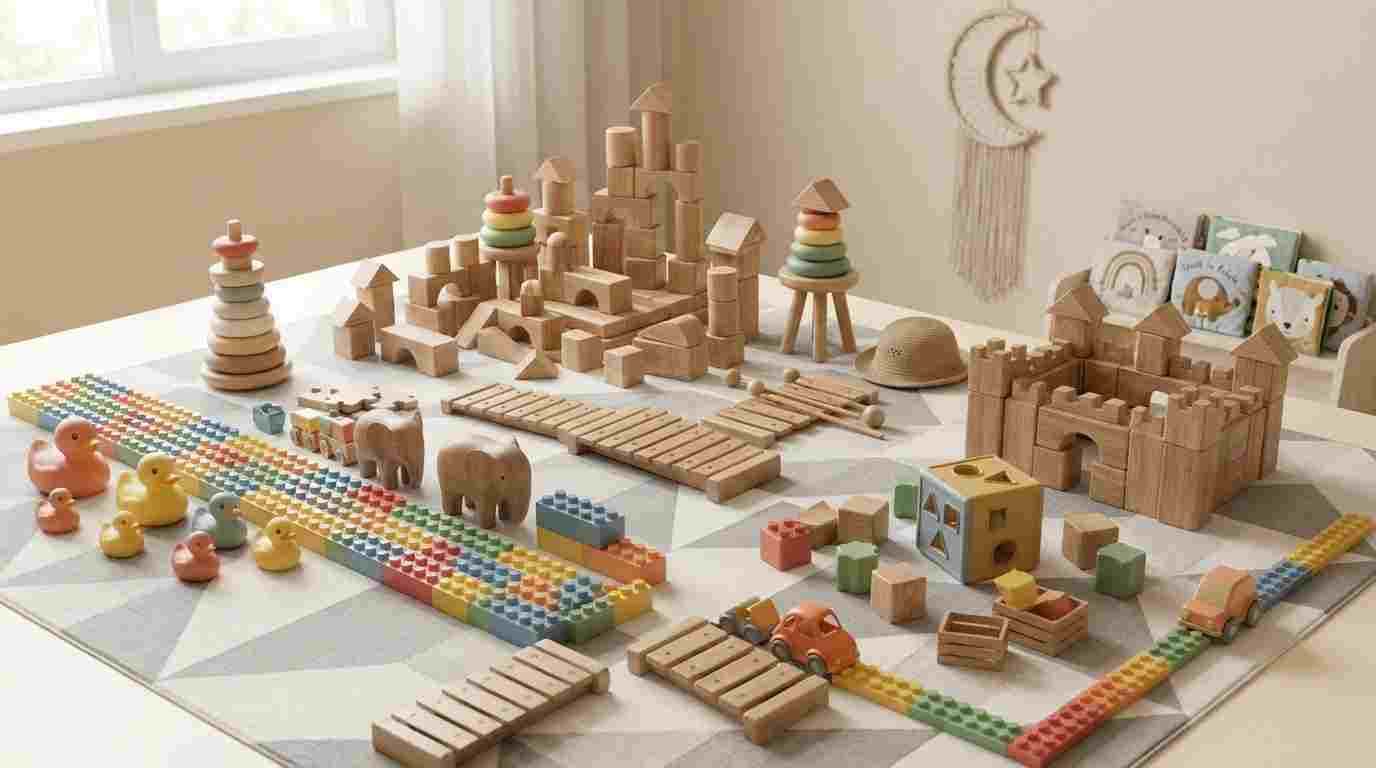
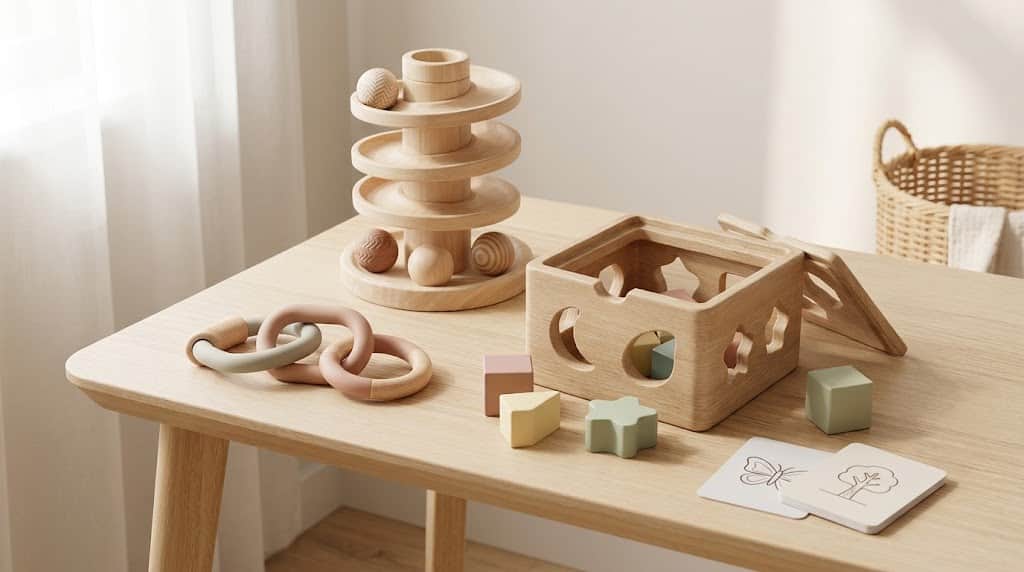
Wooden toys are playthings made primarily from wood. They include building blocks, stacking rings, puzzles, pretend-play accessories, and musical instruments.
Many parents appreciate wooden toys because of their simple designs, natural appearance, and potential for repeated, imaginative play. Rather than relying on flashing lights or electronic sounds, many wooden toys encourage children to explore shapes, colours, balance, movement, and problem-solving through hands-on activities.
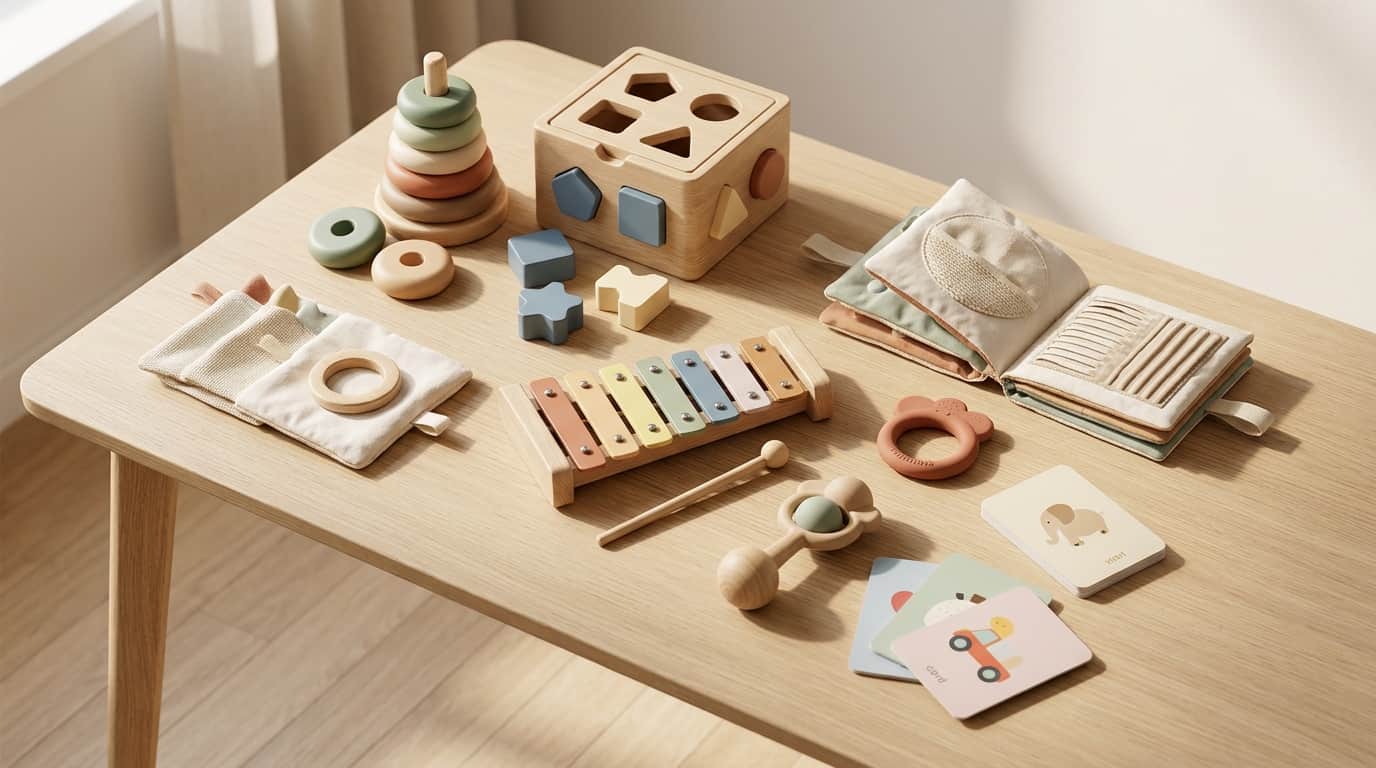
Popular examples include wooden blocks, shape sorters, stacking toys, and xylophones.
For example, a musical toy such as the BrainyBox Xylophone can introduce children to sounds, rhythm, and cause-and-effect through play.
However, not every wooden toy is automatically safe or environmentally friendly. Its safety depends on the materials, construction, surface finish, size, and suitability for the child's age.
What Are Plastic Toys?
Plastic toys are made from different types of plastic and come in an enormous range of shapes, sizes, colours, and designs.
Examples include stacking cups, pretend-play sets, toy vehicles, sensory toys, building sets, and interactive learning toys.
One of the biggest advantages of plastic toys is their versatility. Manufacturers can create lightweight designs, bright colours, movable components, and features that may be difficult to produce using wood alone.
Some plastic toys are also easy to clean, making them practical for everyday play. However, cleaning requirements vary depending on the toy's construction, and electronic toys may require special care.
Plastic toys can be durable and safe when properly designed and manufactured. The important consideration is not simply whether a toy is made from plastic, but whether its materials and construction are appropriate for your child.
Wooden Toys vs Plastic Toys: A Quick Comparison
Before exploring the differences in detail, here is a quick comparison of the two options.
Feature
Wooden Toys
Plastic Toys
Durability
Can last for years when well made and properly maintained
Quality varies; sturdy toys can last for years
Design
Often simple, tactile, and natural-looking
Available in many shapes, colours, and designs
Learning opportunities
Can encourage imagination, coordination, and problem-solving
Can support similar skills through suitable activities
Cleaning
May require careful wiping and thorough drying
Some designs are easy to wash or wipe clean
Portability
Heavier designs may be less convenient to carry
Lightweight options are widely available
Cost
Some premium wooden toys have a higher upfront price
Available across a wide range of price points
Environmental impact
Depends on wood sourcing, finishes, manufacturing, and lifespan
Depends on plastic type, manufacturing, lifespan, and disposal
Safety
Depends on construction, finish, size, and age suitability
Depends on materials, construction, size, and age suitability
The key takeaway: Neither material is automatically better in every situation. The best choice is a well-made, age-appropriate toy that supports your child's interests and can withstand regular use.
1. Safety: Are Wooden Toys Safer Than Plastic Toys?
Safety should be a priority whenever you purchase a toy for a baby, toddler, or young child.
Some parents prefer wooden toys because they are concerned about the materials used in plastic products. Others choose plastic toys because they are lightweight and easy to clean. However, material alone does not determine whether a toy is safe.
What to Check When Buying Wooden Toys
When purchasing a wooden toy, look for:
Smooth surfaces without splinters.
Securely attached components.
Rounded edges where appropriate.
Durable construction that resists breaking.
Suitable, clearly described surface finishes.
A recommended age range that matches your child's abilities.
Painted or coated wooden toys should have appropriate safety information. Do not assume that a product is non-toxic simply because it is made from wood.
What to Check When Buying Plastic Toys
For plastic toys, look for:
Sturdy construction that does not break easily.
No sharp edges or damaged components.
Appropriate material and safety information.
Securely attached parts.
Age recommendations and relevant warnings.
No accessible loose components that could create a choking hazard.
Avoid toys with unknown materials, strong chemical odours, or signs of poor construction.
The American Academy of Pediatrics provides additional guidance in its article on how to buy safe toys.
Important safety reminder: Keep small parts away from children who could choke on them, especially children under three. Always follow the manufacturer's age recommendations and supervise young children during play.
2. Durability: Which Toys Last Longer?
Durability is another important consideration when comparing wooden toys vs plastic toys.
Parents often want toys that can withstand repeated use without breaking, particularly when purchasing toys for toddlers who may drop, throw, or bang them during play.
The Durability of Wooden Toys
Well-made wooden toys can last for years when cared for properly. Solid construction and simple designs may allow some toys to be passed between siblings or reused by younger family members.
For example, stacking blocks and puzzles can remain useful as children grow and discover new ways to play.
However, wooden toys are not indestructible. They can crack, splinter, or deteriorate if poorly made, exposed to excessive moisture, or subjected to rough handling.
The Durability of Plastic Toys
Plastic toys vary considerably in quality. Thick, well-constructed plastic can withstand frequent use, while thin plastic may crack or break under pressure.
Plastic toys with moving parts, hinges, or electronic components may also require additional care.
Inspect toys regularly and stop using any product that develops sharp edges, loose pieces, exposed wiring, or other damage.
Which Is Better?
If long-term use is your priority, focus on construction quality rather than material alone.
A sturdy wooden toy may outlast a poorly made plastic toy, but a well-designed plastic toy can also provide years of enjoyment.
3. Learning and Development: Which Toys Help Children Learn?
Children learn through exploration, repetition, movement, imagination, and interaction with the people around them.
Both wooden and plastic toys can support these activities. The learning value depends more on what the child can do with a toy than on the material it is made from.
How Wooden Toys Can Support Learning
Many traditional wooden toys encourage open-ended play.
For example, building blocks can help children experiment with balance, size, shape, and spatial relationships. Stacking toys can encourage hand-eye coordination and problem-solving.
Musical toys can also introduce rhythm, sound, and cause-and-effect.
A wooden tower puzzle may provide opportunities for children to practise stacking, handling objects, and exploring how different pieces fit together, provided the particular product is appropriate for their age.
How Plastic Toys Can Support Learning
Plastic toys can offer equally useful learning opportunities.
Stacking cups may encourage children to explore size and order. Shape sorters can help them practise matching shapes, while pretend-play sets can inspire storytelling and social interaction.
Some plastic toys also offer sensory experiences through different textures, colours, and movements.
Neither wooden nor plastic toys have an automatic developmental advantage.
Choose toys that invite your child to think, explore, experiment, and use their imagination. Simple toys that allow several ways to play can be particularly useful because children can discover new activities as their skills develop.
Remember that no toy guarantees a developmental milestone. Children benefit from a variety of play experiences, including playing with caregivers, exploring safe everyday objects, reading, moving, and interacting with others.
4. Environmental Impact: Are Wooden Toys More Eco-Friendly?
Environmental impact is an increasingly important consideration for parents.
Wooden toys are often marketed as environmentally friendly, while plastic toys are frequently associated with waste. However, the full picture is more complicated.
The Environmental Considerations of Wooden Toys
Wood can be a renewable resource when it comes from responsibly managed forests.
A durable wooden toy that remains in use for many years may reduce the need for frequent replacements. Nevertheless, its environmental impact also depends on where the wood comes from, how it is processed, what finishes are used, and how far it travels.
Not every wooden toy is sustainably sourced, so parents should look for clear information about materials and manufacturing when environmental impact is a priority.
The Environmental Considerations of Plastic Toys
Plastic toys can be lightweight and long-lasting, but many are difficult to recycle because of mixed materials, coatings, electronic components, or small parts.
Discarded plastic can contribute to long-term environmental pollution when it is not properly managed.
On the other hand, a durable plastic toy that is used for years, shared between children, or passed on to another family may be more useful than a product that is quickly discarded.
Which Is the Better Environmental Choice?
Consider the complete life cycle of the toy.
Ask yourself:
Is the product built to last?
Can it be safely reused or passed on?
Are its materials clearly identified?
Does it require frequent replacement?
Can it be repaired or responsibly disposed of?
Buying fewer, better-made toys and using them for longer can be a practical starting point, regardless of the material.
5. Price: Are Wooden Toys More Expensive?
Budget matters when choosing toys, particularly when children outgrow some toys quickly or have changing interests.
The price of wooden and plastic toys varies by brand, size, design, materials, and manufacturing quality.
The Cost of Wooden Toys
Some wooden toys have a higher initial price because of their materials, craftsmanship, or construction.
However, a durable toy that remains useful for several years may offer good value over time.
Simple wooden blocks, stacking toys, and puzzles can also provide repeated play opportunities without requiring batteries or electronic features.
The Cost of Plastic Toys
Plastic toys are available across a broad range of prices. Families can find simple, affordable options as well as more expensive interactive and electronic products.
However, the cheapest option is not necessarily the best value. A toy that breaks quickly may need replacing, increasing its overall cost.
How to Choose Within Your Budget
Before purchasing a toy, consider its likely lifespan, age suitability, durability, and educational or play value.
You can explore the BrainyBox toy collection to compare available options and choose products that fit your child's needs and your budget.
The goal is not to purchase the most expensive toy. It is to select a suitable product that your child can enjoy safely and repeatedly.
6. Cleaning and Maintenance: Which Is Easier to Maintain?
Cleaning is especially important for toys used by babies and toddlers, who often put objects in their mouths.
However, the easiest toy to clean depends on its design and the manufacturer's care instructions.
Caring for Wooden Toys
Wooden toys generally need careful cleaning to prevent damage.
Depending on the manufacturer's instructions, you may be able to wipe them with a slightly damp cloth and allow them to dry completely.
Avoid soaking wooden toys unless the manufacturer specifically says that it is safe. Excessive moisture can damage wood, finishes, or glued components.
Inspect the surface regularly for splinters, cracks, peeling paint, or loose parts.
Caring for Plastic Toys
Some plastic toys can be washed with soap and water, making them convenient for everyday cleaning.
However, not every plastic toy is suitable for immersion or dishwasher cleaning. Electronic components, fabric attachments, and complex designs may require different care.
Always follow the product's instructions and allow toys to dry thoroughly before returning them to your child.
Which Is Better for Hygiene?
Neither material is automatically more hygienic.
Regular cleaning, proper drying, product design, and the manufacturer's instructions matter more than whether a toy is made from wood or plastic.
7. Which Toys Are Best for Different Ages?
The right toy should match your child's age, abilities, interests, and stage of development.
A toy that is enjoyable for a four-year-old may be unsuitable for a baby because of small parts or other hazards.
Toys for Babies
For babies, prioritise toys specifically designed for their age, with appropriate size, secure construction, and no accessible small parts.
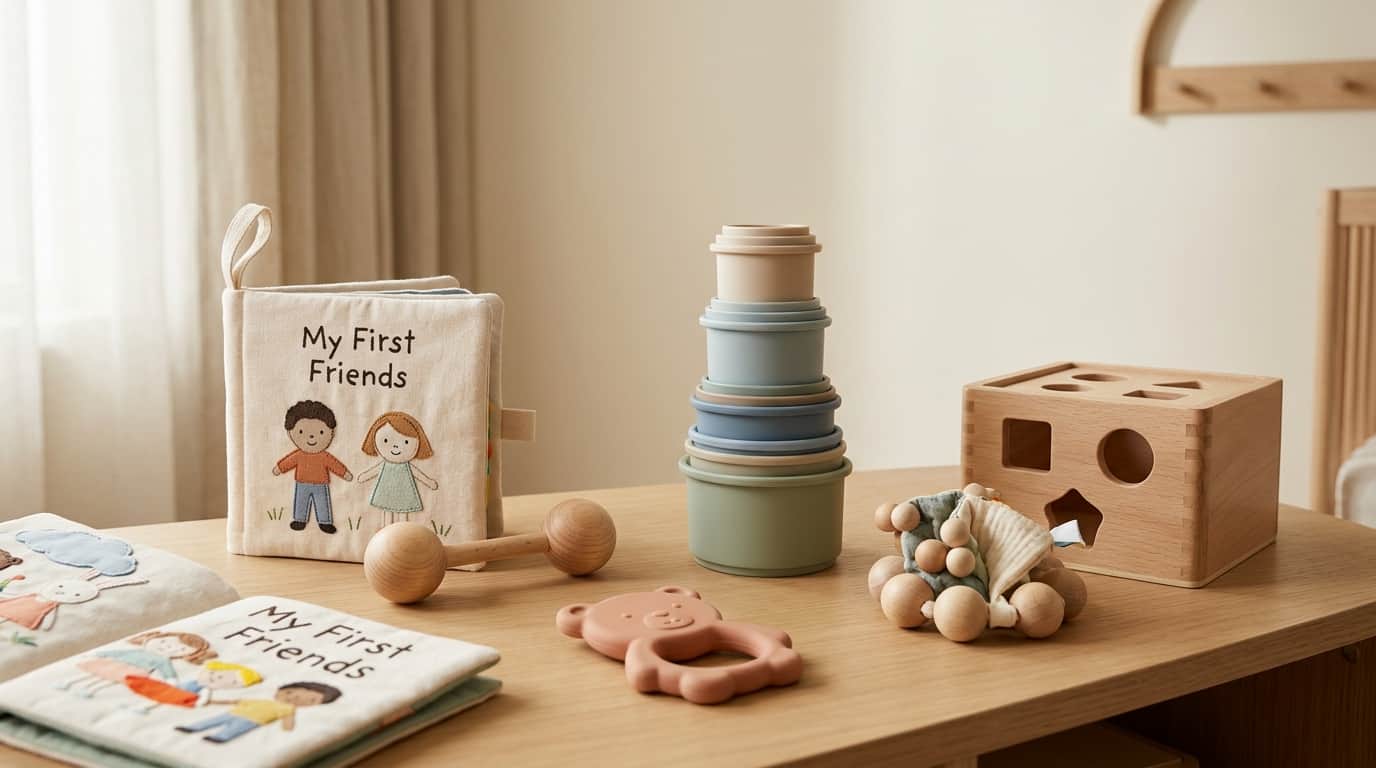
Suitable options may include age-appropriate rattles, sensory toys, and simple grasping toys.
Always check the age recommendation on the individual product. A category label is a starting point, not a substitute for reading the product's safety information.
8. Wooden Toys vs Plastic Toys: Which Should You Choose?
After comparing safety, durability, development, environmental impact, price, and maintenance, you may still wonder which material is right for your child.
Here is a simple way to approach the decision.
Choose wooden toys when:
You prefer traditional, tactile designs.
You want simple toys that encourage open-ended play.
You find a well-made option that suits your child's age.
You want a toy that may remain useful for years with proper care.
Choose plastic toys when:
You need a lightweight option.
You want a particular design, feature, or type of play.
You prefer a product that can be cleaned easily according to its instructions.
You find a sturdy, age-appropriate option that fits your budget.
Consider both when:
You want to provide different play experiences.
Your child enjoys a variety of activities.
You want to balance simple, open-ended toys with more specialised play options.
There is no need to choose one material exclusively. A thoughtful mix of suitable toys can offer variety while helping you avoid unnecessary purchases.
9. What Should Parents Check Before Buying Any Toy?
Before adding a toy to your shopping basket, use this practical checklist.
1. Check the recommended age. Make sure the toy suits your child's current abilities and developmental stage.
2. Inspect the construction. Look for secure components, smooth edges, and materials that appear suitable for the intended use.
3. Watch for choking hazards. Keep small parts, small balls, and other dangerous components away from children who may swallow them.
4. Review the material information. Do not assume that a wooden toy is automatically non-toxic or that every plastic toy is unsafe.
5. Consider the activity. Ask whether the toy encourages exploration, movement, imagination, coordination, or problem-solving.
6. Read the care instructions. Check how the toy should be cleaned and maintained.
7. Inspect toys regularly. Remove damaged products from use if they develop sharp edges, cracks, loose parts, or other hazards.
Not necessarily. Wooden toys may appeal to parents who prefer simple, tactile designs, while plastic toys offer variety in shape, weight, and features. Safety, construction quality, age suitability, and play value are more important than material alone.
Are wooden toys safer for babies?
Not automatically. Wooden toys can have splinters, unsafe finishes, or small components, while plastic toys can break or contain detachable parts. Choose a product designed for your baby's age, follow its safety instructions, and supervise play.
Do plastic toys affect children's development?
Plastic toys can support learning when they encourage appropriate activities such as stacking, sorting, building, imaginative play, or coordination. The developmental value depends on how the toy is designed and used, rather than simply on its material.
Are wooden toys more environmentally friendly?
They can be, particularly when made from responsibly sourced materials and used for a long time. However, environmental impact also depends on manufacturing, finishes, transportation, durability, and disposal. A long-lasting product is often a more practical choice than one that requires frequent replacement.
Should I buy only wooden toys for my child?
No. There is no need to limit your child to one material. A combination of safe, age-appropriate wooden and plastic toys can provide different experiences and suit different interests.
How many toys does a child need?
There is no universal number. A smaller selection of suitable toys that your child uses regularly may be more useful than a large collection of rarely used items. Rotate toys occasionally to introduce variety without constantly buying new products.
Final Verdict: Wooden Toys vs Plastic Toys
When it comes to wooden toys vs plastic toys, the best choice is not determined by material alone. Both types can support enjoyable and meaningful play when they are well made, safe, and appropriate for your child's age.
Wooden toys can offer tactile experiences and simple opportunities for open-ended play. Plastic toys can provide lightweight designs, varied features, and practical options for different activities. Neither type is automatically safer, more educational, or more environmentally friendly in every situation.
As a parent, focus on what matters most: safety, durability, age suitability, and the opportunities a toy provides for exploration and imagination.
At BrainyBox Bangladesh, you can explore a range of toys to help find options that suit your child's interests and your family's needs.
Explore Toys at BrainyBox Bangladesh
Looking for toys that encourage curiosity, creativity, and hands-on play?
Choose thoughtfully, prioritise safety, and remember that the most valuable part of play is often the opportunity for children to explore, experiment, and enjoy learning at their own pace.