Screen Free Toys for Toddlers - Why Hands-On Play Builds Better Brains Than Any Screen
Oct 28, 2026 . Shahriar Obayed
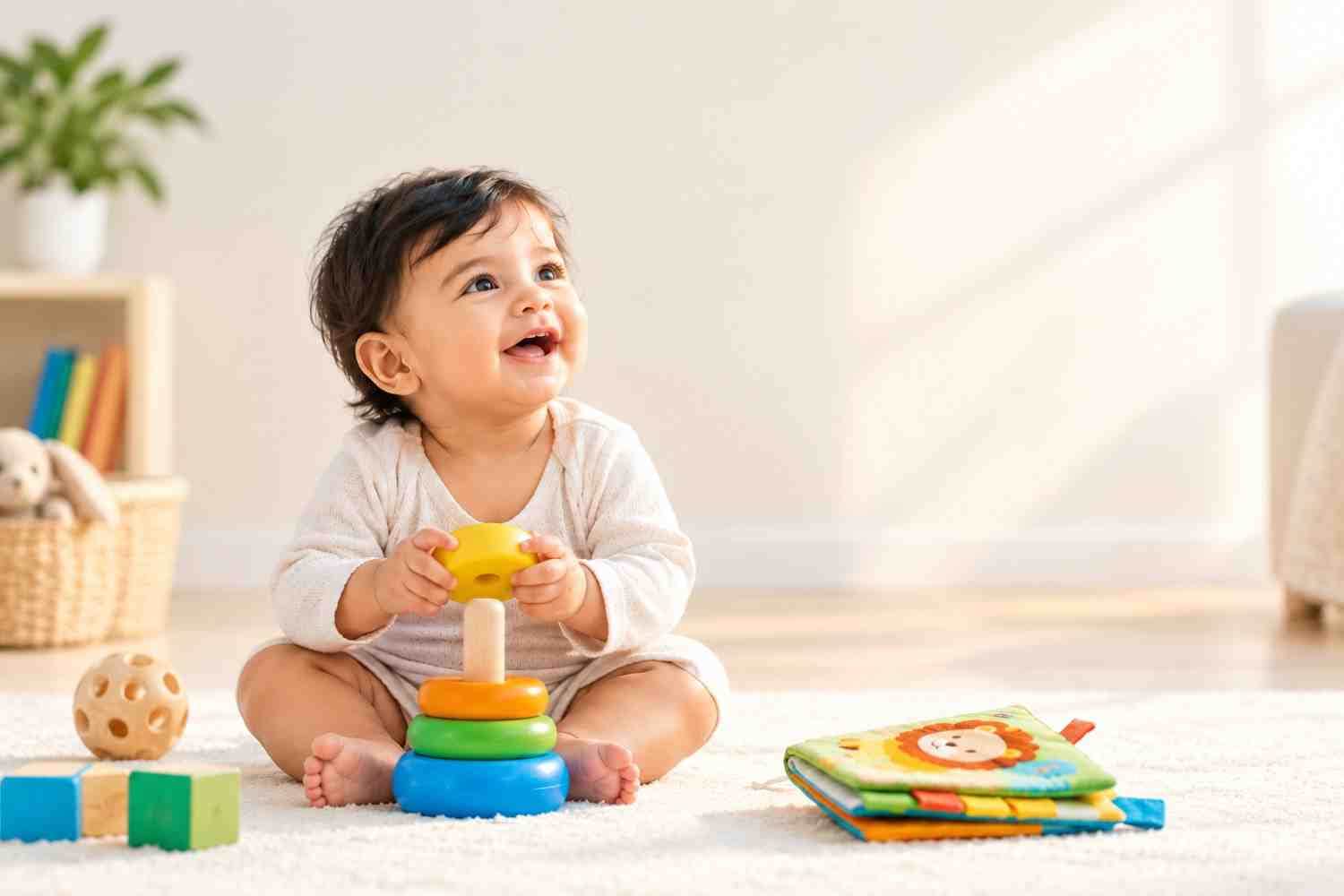
Choosing the right baby toys 6 months Bangladesh parents can trust is an important step in supporting a baby's early development. At six months, babies become increasingly curious about their surroundings. They begin reaching for objects, exploring different textures, making sounds, and learning that their actions can produce interesting results. The right toys can turn these everyday discoveries into valuable learning experiences.
When searching for baby toys 6 months Bangladesh families can buy online, parents should look beyond colourful designs and attractive packaging. Developmental toys should encourage sensory exploration, hand-eye coordination, grasping, listening, and safe discovery. Simple toys such as rattles, soft cloth books, teethers, and stacking rings can provide meaningful opportunities for babies to learn through play.
Finding suitable baby toys 6 months Bangladesh parents can choose confidently also means considering safety, materials, size, and age recommendations. At BrainyBox, parents can explore toys designed to encourage hands-on play and early learning without relying on screens or complicated electronic features.
In this guide, we explain what six-month-old babies need, which toys are worth considering, how to choose safe products, and how to create a stimulating play environment at home.
1. What Makes Six Months an Important Stage of Development?
Six months is an exciting stage in a baby's development. Every baby grows at their own pace, but many babies around this age become more interested in reaching, grasping, exploring objects, and interacting with caregivers.
Toys can support these emerging abilities by giving babies opportunities to practise new movements and explore cause and effect.
Developing Hand-Eye Coordination
Babies begin practising how to coordinate what they see with how they move their hands. Reaching for a rattle, grabbing a soft toy, or trying to hold an object with both hands provides valuable practice.
Lightweight toys with easy-to-grip shapes can encourage these movements without overwhelming little hands.
Exploring Different Textures
Babies learn about their environment through touch. Soft fabric, textured surfaces, and appropriately designed teethers provide different sensory experiences.
A cloth book with textured sections, for example, gives babies something interesting to touch while a caregiver names the animals, colours, or objects on each page.
Learning Cause and Effect
When a baby shakes a rattle and hears a sound, they begin discovering a relationship between their actions and the results.
Repeating this activity helps babies explore their environment and develop early problem-solving skills.
Strengthening Social Interaction
Play is also an opportunity for bonding. When parents smile, talk, sing, and respond to a baby's sounds, they support early communication and social development.
A simple toy becomes more valuable when it encourages interaction between a baby and a caregiver.
2. Best Types of Baby Toys for Six-Month-Old Babies
The best toys for this age are generally simple, engaging, easy to handle, and designed for the baby's current developmental abilities.
Here are some useful categories to consider.
1. Soft Cloth Books
Cloth books introduce babies to pictures, textures, and early language in a gentle, age-appropriate way.
Parents can point to pictures, name familiar animals, and describe what appears on each page. Textured sections and crinkly materials can also encourage babies to explore with their hands.
Developmental benefits:
Encourages sensory exploration.
Introduces pictures, colours, and familiar objects.
Supports parent-child interaction.
Creates opportunities for early language exposure.
Explore the Animal Tails Cloth Book at BrainyBox to discover a soft-book option for sensory play.
Always check the product's age guidance, construction, and care instructions before giving it to your baby.
2. Baby Rattles
Rattles are classic early-learning toys because they respond immediately to a baby's movements.
When a baby shakes a rattle and hears a sound, the experience encourages exploration and repetition. Caregivers can gently shake the toy from different positions to encourage the baby to look, listen, and reach.
Developmental benefits:
Encourages grasping and reaching.
Introduces sound recognition.
Supports listening and visual attention.
Demonstrates basic cause and effect.
The Babu's Music Rattle is one option to explore. Check its stated age range and suitability before purchasing, as the product listing references a later age range.
Choose a rattle that is lightweight, securely constructed, and appropriately sized for a baby's hands. Avoid products with detachable components or parts that could become choking hazards.
3. Baby Teething Toys
Around six months, many babies begin teething or show an increased interest in chewing and mouthing objects.
A suitable teether can provide a dedicated object for supervised chewing and may help soothe irritated gums.
Developmental benefits:
Encourages safe sensory exploration when the product is age-appropriate.
Gives babies opportunities to practise holding and transferring objects.
Supports independent exploration under supervision.
Browse the BrainyBox teething toy collection to explore available options.
Before purchasing, check the manufacturer's material information, age recommendation, cleaning instructions, and safety details. Do not assume a product is safe simply because its description uses terms such as non-toxic or food-grade.
Avoid teething products containing liquid that could leak, loose components, or detachable parts. Never attach a teether around a baby's neck.
4. Soft and Textured Sensory Toys
Sensory toys encourage babies to explore differences in texture, shape, sound, and appearance.
A soft toy with securely attached textured sections can make supervised play more engaging. Parents can also introduce simple sensory activities using suitable household objects, provided the objects are safe for the baby's age.
Developmental benefits:
Encourages tactile exploration.
Supports reaching and grasping.
Introduces different shapes and textures.
Promotes interaction with caregivers.
Choose toys designed specifically for infants rather than ordinary household objects that may contain small parts, sharp edges, or unsafe materials.
5. Stacking Rings and Simple Grasping Toys
Stacking rings can be interesting for babies who are beginning to grasp and manipulate objects.
At six months, babies may enjoy holding, mouthing, or transferring individual rings more than actually stacking them. More complex stacking activities can develop as their coordination improves.
Explore the BrainyBox Tower Builder for a stacking-toy option, but confirm that the product is suitable for your baby's age before use.
Developmental benefits:
Encourages reaching and grasping.
Provides opportunities to practise releasing objects.
Introduces differences in size and colour.
Supports hand-eye coordination.
For babies this young, avoid rings or other pieces that are too small, detachable components that could become choking hazards, and toys that have not been designed for infant use.
3. How to Choose Safe Baby Toys in Bangladesh
Safety should be the first consideration when buying toys for a six-month-old baby.
Babies explore objects by touching them, moving them between their hands, and frequently putting them in their mouths. A toy that is appropriate for an older child may not be suitable for an infant.
Before purchasing, consider the following factors.
Check the Recommended Age
Look for the manufacturer's age recommendation and warnings.
A toy marketed for babies aged 7–9 months, for example, should not automatically be treated as suitable for a six-month-old. Developmental abilities vary, but age guidance is an important starting point.
If the product's suitability is unclear, contact the seller or manufacturer before buying it.
Avoid Small and Detachable Parts
Small objects can present a serious choking risk.
Inspect toys for detachable decorations, loose components, small accessories, and parts that could break off during normal use. Avoid toys with accessible batteries or battery compartments that a child could open.
Examine the Materials and Construction
Choose toys made from materials appropriate for infant use.
Look for smooth edges, secure seams, durable construction, and clear cleaning instructions. Avoid toys with strong chemical odours, peeling finishes, sharp edges, or damaged surfaces.
Claims such as BPA-free, food-grade, or non-toxic should be supported by reliable product information rather than assumed from marketing language.
Consider Cleaning and Hygiene
Toys that babies regularly mouth need frequent cleaning.
Check whether a toy can be washed or wiped according to the manufacturer's instructions. Fabric toys should be cleaned as directed, while teethers and other mouth-contact products should be maintained according to their specific care guidelines.
Do not boil, microwave, freeze, or sterilise a toy unless the manufacturer explicitly permits that method.
Supervise Every Play Session
Even well-designed infant toys require appropriate supervision.
Keep babies away from loose cords, button batteries, magnets, plastic packaging, and small household items. Never leave a baby unattended with a toy that could pose a choking, strangulation, or other safety risk.
4. How Much Should You Spend on Baby Toys in Bangladesh?
Parents do not need to purchase dozens of toys to support a baby's development.
A small collection of carefully selected, age-appropriate toys can provide plenty of opportunities for exploration. The key is choosing items that serve different purposes rather than buying several toys that offer the same experience.
For example, a basic play collection might include:
One soft cloth book for pictures, textures, and shared reading.
One suitable rattle for sound and cause-and-effect exploration.
One age-appropriate teether for supervised chewing.
One safe grasping toy for reaching and holding.
You can gradually introduce additional toys as your baby develops new interests and abilities.
Compare Value, Not Just Price
When shopping online, compare the product's age recommendation, construction, materials, cleaning requirements, and intended developmental use.
A low price does not necessarily mean a product is good value if it is unsuitable for your baby or difficult to clean.
Likewise, an expensive toy is not automatically more educational than a simple rattle or cloth book.
BrainyBox offers a range of baby and early-learning toys at different price points. Check individual product pages for current prices, availability, and detailed product information before ordering.
5. Screen-Free Play: Why Simple Toys Still Matter
Parents often feel pressure to use digital entertainment to keep babies occupied. However, young babies do not need tablets or smartphones to explore their environment.
Screen-free play gives babies opportunities to interact directly with objects, caregivers, and their surroundings.
A rattle makes a sound when shaken. A cloth book feels different from a smooth teether. A caregiver's voice changes as they sing, speak, or respond to a baby's babbling.
These experiences involve movement, sensory exploration, and social interaction.
Encourage Active Exploration
Give your baby opportunities to reach for a suitable toy while you remain close by. Allow time for them to examine it, move it between their hands, and discover what happens when they shake or release it.
Follow your baby's interest rather than insisting that they use a toy in a particular way.
Talk During Play
Describe what your baby is doing using simple words.
You might say, "You shook the rattle!" or "Look at the soft animal!"
Your baby does not need to understand every word for the interaction to be worthwhile. Hearing language in meaningful, responsive situations supports early communication.
Keep Activities Short and Flexible
Babies have changing attention spans and need time to rest, feed, and sleep.
Offer a toy when your baby is alert and interested, and take a break when they become tired or overwhelmed.
The goal is not to keep a baby entertained constantly. It is to provide safe, responsive opportunities for discovery.
6. Simple Play Activities for Six-Month-Old Babies
You do not need complicated activities to make playtime valuable.
Try these simple ideas with suitable toys and close adult supervision.
Rattle and Reach
Hold a lightweight, age-appropriate rattle within your baby's comfortable reach.
Allow your baby to look at it, reach toward it, and grasp it independently when possible. You can gently move the rattle to encourage visual tracking without moving it too quickly or frustrating your baby.
Explore a Cloth Book Together
Sit with your baby and open a soft cloth book.
Point to pictures, describe textures, and name familiar animals or objects. Pause to give your baby time to look, touch, and respond.
Practise Holding and Transferring
Offer an appropriately sized toy that your baby can grasp securely.
If your baby is interested, let them explore holding it with one hand and moving it toward the other. Avoid forcing movements or placing the toy in a position that causes discomfort.
Enjoy Supervised Floor Play
Provide a clean, safe floor space with an appropriate play mat.
Place one or two suitable toys nearby to encourage reaching and movement. Stay close, remove potential hazards, and follow your baby's cues.
Never leave a baby unattended on an elevated surface or surrounded by objects that could pose a risk.
7. Why Choose BrainyBox for Baby Toys in Bangladesh?
Finding suitable toys becomes easier when parents can compare options by age, type, and intended use.
BrainyBox offers a collection of toys and early-learning products for families looking for practical play options.
Rather than choosing a toy solely because it looks attractive, parents can consider how it might fit into everyday play.
Explore Age-Relevant Products
Start by reviewing the manufacturer's recommended age and the developmental activities a toy supports.
You can explore the BrainyBox shop to browse the available collection and compare products.
For younger babies, the baby and early-age toy category may be a useful starting point. Always confirm the individual product's suitability for a six-month-old before ordering.
Choose Toys That Encourage Interaction
Simple toys can create opportunities for babies and caregivers to play together.
A rattle can encourage turn-taking sounds. A cloth book can introduce pictures and language. An appropriate teether can give a baby a dedicated object to explore orally.
These everyday activities can make playtime engaging without requiring electronic features.
Check Product Details Before Ordering
Product availability, prices, materials, and delivery arrangements may change.
Read each listing carefully and contact the seller if you need clarification about age suitability, product dimensions, cleaning instructions, or safety information.
Making an informed choice is more important than buying a large number of toys.
Frequently Asked Questions About Baby Toys for Six-Month-Olds
Q1. What are the best toys for a six-month-old baby?
Ans: Suitable options may include lightweight rattles, soft cloth books, age-appropriate teethers, and easy-to-grasp sensory toys. Choose products that match your baby's abilities and follow the manufacturer's age recommendations.
Q2. Are rattles good for six-month-old babies?
Ans: An appropriately designed rattle can encourage grasping, listening, visual attention, and cause-and-effect exploration. Choose a securely constructed product without detachable small parts and supervise its use.
Q3. Are teethers necessary at six months?
Ans: Not every baby needs a teether at exactly six months. However, babies who are teething may benefit from an appropriate teething toy. Follow the manufacturer's instructions and ask a healthcare professional if you have concerns about your baby's symptoms.
Q4. How many toys does a six-month-old need?
Ans: There is no fixed number. A small selection of safe toys offering different sensory experiences is usually sufficient. Rotate suitable toys according to your baby's interests rather than purchasing many items at once.
Q5. Should six-month-old babies use screens?
Ans: For infants younger than 18 months, the American Academy of Pediatrics generally recommends avoiding screen media other than video chatting. Parents should prioritise responsive interaction, sleep, and age-appropriate play.
Q6. How can I buy baby toys online in Bangladesh?
Ans: Browse reputable online retailers, read product descriptions carefully, check age recommendations and safety information, and confirm current prices and delivery arrangements before ordering.
Contact BrainyBox for Baby Toys in Bangladesh
Choosing suitable toys for your six-month-old does not have to be complicated. Start with a few carefully selected products that encourage grasping, sensory exploration, listening, and interaction with caregivers.
Explore the BrainyBox toy collection to discover available options for your baby's early learning and playtime. Before placing an order, check the individual product details to confirm that the toy is suitable for your child's age.
For general guidance on children's development and age-appropriate activities, visit the American Academy of Pediatrics, which provides evidence-informed information for parents and caregivers.
Give your baby more opportunities to explore, discover, and learn—one safe play experience at a time.